
Company Vehicles and Tax: Cars, Vans and the Pool Car Rules
Glenn Bowen, Director, Grampian Accounting – September 2026
“Should I put the car/van through the company?” is one of the questions we get asked a lot, and it’s one where an informed choice can save literally thousands a year. The reason it’s tricky is that vehicles are taxed as a benefit-in-kind — i.e. a company asset that is being used for personal benefit — and how much that costs depends enormously on whether HMRC sees the vehicle as a car, a van, or a genuine pool car.
The short version
Cars are taxed on list price and emissions and are the expensive option (electric and some hybrids aside); vans carry a low, flat charge (£4,170 for 2026/27, nil if electric) and are far cheaper; and a genuine pool car escapes benefit-in-kind entirely — but only if it meets every one of the strict conditions and you can prove it. Remember that it’s availability that’s taxed, not how much you actually drive, and watch the recent changes to pickups and the risks of converting a car into a van.
First – The Basics
When a vehicle is owned by an individual the only cost that can be put against your company is a per mile usage of 55p (for the first 10,000 miles and 25p thereafter). If you use your personal vehicle for 10,000 miles of business travel in the year (ideally documented in a log for backup) then you will receive £5,500 back from your company for usage. If the vehicle is owned by the company then instead of mileage you claim direct costs – road tax, insurance, fuel, repairs, MOTs etc.
The latter of these is preferrable – claim all the costs. HMRC, however, realise that a vehicle has a personal use element to it and, instead of asking you to provide an exact breakdown of that personal use, they apply a benefit-in-kind. This is a tax on the personal use of a company asset and it’s what we refer to below when talking about a P11d benefit. This tax is what can swing a vehicle from being an attractive company purchase to an incredibly expensive mistake.
Company cars — the expensive one
When the company provides you with a car that’s available for private use, you pay tax on a benefit-in-kind. The taxable value is worked out as the car’s list price multiplied by a percentage set by its CO₂ emissions — so the more polluting and the more expensive the car, the bigger the tax bill. For a typical petrol or diesel car this can be a hefty number, and you pay income tax on it every year while the company pays Class 1A National Insurance on top.
The key phrase there is “available for private use”, and it’s the thing people misunderstand most. The benefit is based on the car being available to you, not on how much you actually drive it privately. A company car sitting on your drive that you barely touch still generates a full benefit charge — low mileage doesn’t reduce it.
The big exception, for now, are fully electric cars. A fully electric company car currently attracts a very low benefit-in-kind percentage — rising gradually over the next few years, but still far below a petrol or diesel equivalent — which is why an EV through the company can make real sense where a conventional car wouldn’t.
When we talk about availability business owners must bear in mind that this might also apply to their employees – if there is a company car that is used my several people then more than one may be liable to a P11d benefit.
Company vans — the cheaper one
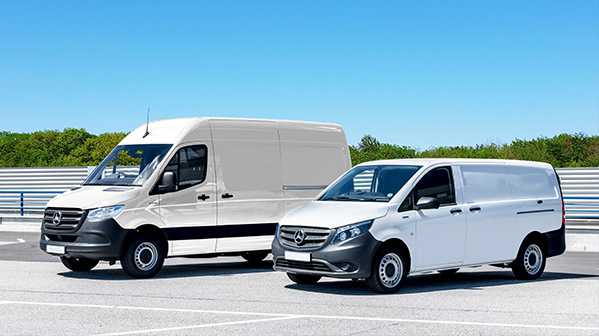
Vans are treated far more kindly, instead of a percentage of list price, a van that’s available for private use carries a flat, fixed benefit charge regardless of the van’s value — for 2026/27 that’s £4,170. If the company also pays for private fuel, there’s a separate flat van fuel benefit of £798.
NB You pay income tax on those figures and the company pays Class 1A NIC — but because they’re fixed and modest, a van is dramatically cheaper to run through the company than a car of similar value – if you are a 21% tax payer then your benefit will be around £1,500 for the year.
Better still, a fully electric van currently carries a nil benefit charge — no benefit-in-kind at all.
Pickup Trucks
One recent change catches people out. Double-cab pickups — long a popular way to get van-style tax treatment on something more comfortable — changed. Those ordered or leased on or after 6 April 2025 are now treated as cars for benefit-in-kind purposes, which significantly increases the tax. There are transitional rules protecting vehicles ordered before that date for a period. Check before you buy.
Pool cars — no benefit at all, if you qualify
The one everyone hopes applies: a genuine pool car carries no benefit-in-kind charge whatsoever. But the bar is strict, and HMRC scrutinises these hard — especially in owner-managed businesses — because the result is no tax. There is significant court case examples where owners genuinely believe their vehicle to be a pool car and they are proven wrong. Take advice here, do not assume you will get the better of HMRC.
For a vehicle to be a pool car, ALL of the following must be true — fail any single one and it’s treated as a normal company car with a full benefit charge:
- It’s available to, and actually used by, more than one employee — it can’t be one person’s car in disguise
- It’s made available to each of them because of their employment
- It’s not ordinarily used by one employee to the exclusion of the others
- Any private use is “merely incidental” to the business use — the odd occasion, not general personal use
- It’s not normally kept overnight at or near an employee’s home
That last condition is the one that most often sinks a claim. A “pool” car that lives on the director’s driveway overnight will almost always fail, because it’s kept at an employee’s home. The car needs to be kept at the business premises (there are court cases where the owner’s residence is the business and this condition has been decided as failed).
The other thing worth stressing: the burden of proof sits with you, not HMRC. If they challenge a pool car claim, it’s for you to prove every condition was met — which is why a mileage log, evidence that other employees genuinely use the vehicle, and keeping it at the business premises with the keys on site all matter enormously. Claim it but be ready to evidence it for every year.
A word on converting cars into vans
Because vans are taxed so much more kindly, people sometimes ask about converting a car — taking the seats out of an SUV, adding a bulkhead — to get it classed as a van. Tread very carefully here. Following a significant court case (the Coca-Cola case), the test is whether the vehicle is PRIMARILY suited to carrying goods, and a converted passenger vehicle that remains genuinely usable for people can easily fail that test and stay classed as a car. Spending real money changing a vehicle only to have HMRC still treat it as a car is a bad outcome twice over. If van treatment is the goal, buying something that’s a van by design is far safer than converting a car and hoping.